The Saturday a unit turns over
Half of Hayward rents, so a large part of the work in this city happens in the few days between one tenancy and the next. The old tenant hands back two keys of the four they were given. The carpet cleaner has been and gone. The new tenant is arriving Saturday with a truck. Somewhere in that week the locks are rekeyed, and the owners who have done it a few times book it for the same morning the cleaners come, so the keys are cut while the floors dry.
The first thing settled on the call is the count, because the count is what makes the figure. A one-bedroom in a Tennyson fourplex is usually two cylinders: the unit door and the mailbox in the entry, if the box belongs to the building. A duplex in Jackson Triangle is four or five: front, back, the side gate both households use, the garage side door, sometimes a shed. A rented tract house in Burbank runs five or six once the door from the garage and the yard gate are counted. Nobody has to walk the property with a clipboard; a description on the call is enough to place it, and the figure is said then.
What a rekey actually changes
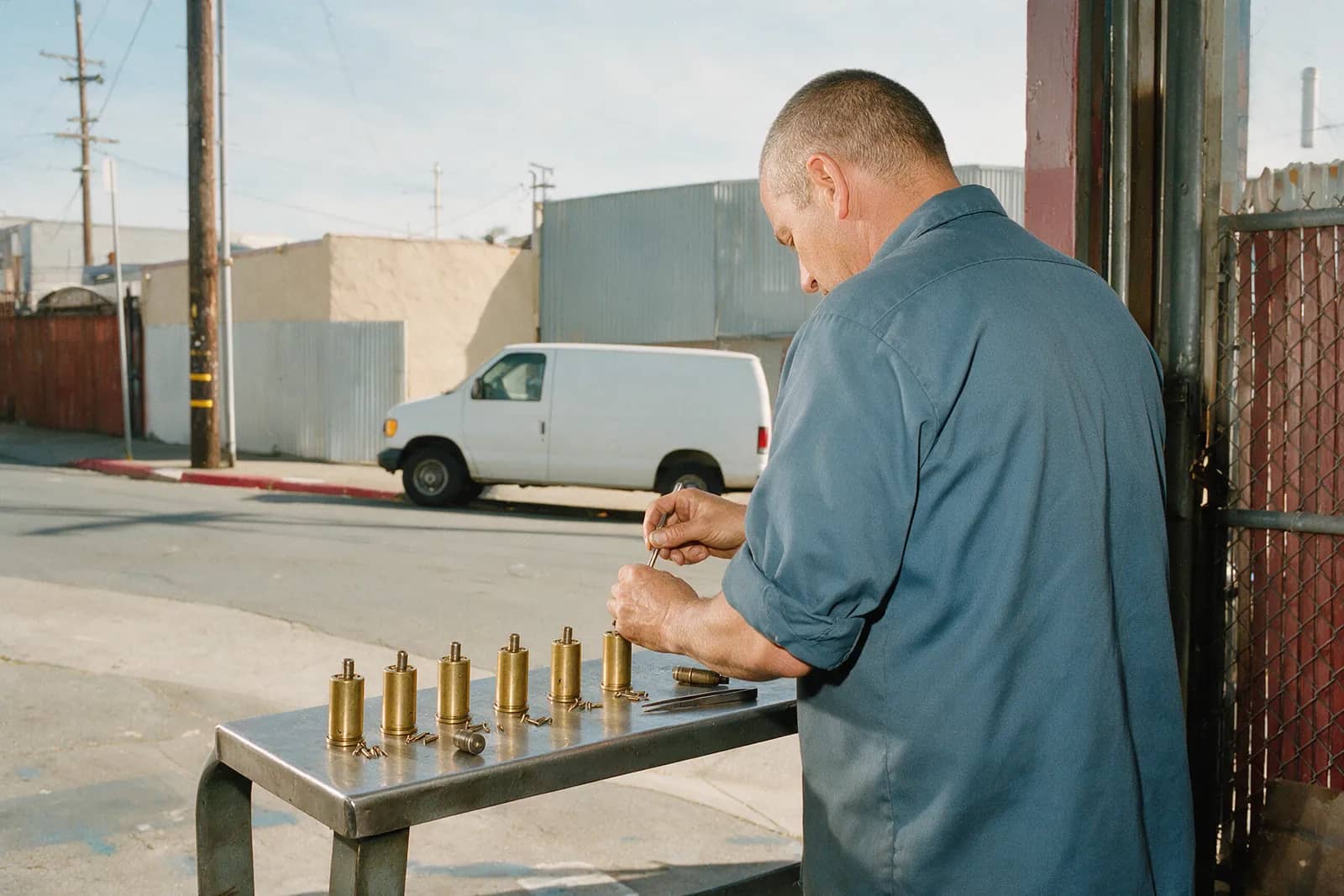
Rekeying takes the cylinder apart and changes the pins inside it, so the keys that were handed out over the last tenancy stop working and a new key starts. The knob, the deadbolt, the finish and the strike all stay on the door. That is $24 to $39 per cylinder. For an owner it matters twice: nothing new has to be bought, and nothing on the door changes for a tenant who will live behind it for two years. A deadbolt fitted in 1994 is usually a perfectly good deadbolt. It does not need replacing. It needs the last four tenants, their friends, the ex who never gave the key back and the handyman from 2019 to stop being able to open it.
Replacement is for hardware that has failed, not for hardware that has changed hands. A latch that no longer springs back, a bolt that has to be lifted into its keeper, a keyway worn so loose that a neighbor's key turns it: those get replaced at $109 to $289 per door, and the make and grade are named before anything goes on. On most turnovers in this city nothing on the list qualifies, and a technician who arrives with a bag of new locks for a unit that only changed tenants has decided the job before seeing the door.
Who is allowed to book it
The cylinder belongs to whoever owns the building, so the rekey is booked by the owner or by the property manager acting for them. Where a manager books it, a short message from the owner naming the manager is asked for and kept with the receipt. That is not paperwork for its own sake. It is the reason nobody can call and have a door in this city rekeyed against the person who lives behind it.
A tenant may not have the owner's cylinder rekeyed on their own say, and that is said plainly on the call rather than discovered when the technician is at the door. What a tenant can do is ask. Every reason a tenant has for asking is a good one: keys lost, keys never returned by a former roommate, a lock that has felt wrong since the move-in, a situation at home that has changed. A message to the owner or manager, and their reply agreeing to it, is all that is needed, and that reply reaches the van as a forwarded text in about a minute. A great many owners say yes immediately, and some pay for it without being asked.
One key per unit, and the doors the building shares
The incoming tenant should get one key that opens every door of their own unit and nothing else. That is keying alike: the deadbolt, the knob and the back door are pinned to the same cut, and the tenant gets two copies instead of a ring that needs labels. Where the owner or the manager keeps a set, it is the same key and it goes in an envelope with the address and the unit on it.
Then there are the doors a building shares, and they are the ones that get forgotten until the second visit. The street gate. The buzzer door. The laundry room. The trash enclosure. The mailbox in the entry, where the box belongs to the building rather than to the post office. On a fourplex those are pinned so that every tenant key passes them and no tenant key opens another unit, and the owner's key opens all of it. On a building of eight or twelve, a small master key system does the same thing more neatly, so a manager walks the round with one key instead of a jailer's ring. That is quoted for the building, with the doors and the key count named in the quote.
When a tenant should call instead
Two calls belong to the tenant and need nobody's permission. The first is a lockout. A person locked out of the home they rent has every right to be let back into it, at any hour, and it is a house lockout at $115 to $199 with the $89 visit inside that figure. The door is picked open rather than drilled, because the cylinder belongs to the owner and a drilled one turns a lockout into a repair somebody has to argue about later. An ID and the lease on a phone are asked for at the door, the same proof asked at an owner's front door in the Highlands.
The second is a door that has stopped working: a deadbolt that no longer throws, a knob that spins, an entry door that will not catch. Report it to the owner or the manager first, because the repair is theirs, and most authorize it in a sentence. If it is late and the unit cannot be locked at all, say that on the call; a door that will not lock is treated as urgent and secured that night, with the owner sent the description in the morning.
What a turnover costs, and what the owner gets on paper
A typical Hayward turnover: four or five cylinders rekeyed at $24 to $39 each, keyed alike by unit, the shared gate pinned so both households pass it, the entry mailbox changed, four copies cut in the van, and the $89 service call inside the figure once. Two units turning in the same building do not double the visit; it is counted once. Between 8pm and midnight $45 sits inside the figure and $80 after midnight, so a Friday evening turnover before a Saturday move-in has a number on it before the van moves rather than a surprise on the receipt.
Eden Locksmith works to the Eden Rule. The figure is said on the call and covers the visit, the labor and the parts. The same figure is on the receipt, whatever the technician finds at the door. The lock is opened without damage first, and drilling happens only after you agree to it and never for a higher figure. Payment is card or tap at the door, the itemized receipt goes to email, and a written line naming the address, the unit, the cylinders rekeyed and who received which keys goes to an owner or a manager who needs one for the file, whether they are in Hayward or in another state.
Quick answers
What does it cost to rekey a Hayward rental between tenants?+
$24 to $39 per cylinder. A one-bedroom apartment is usually two cylinders, a duplex four or five, a rented house five or six once the gate and the door from the garage are counted. The $89 service call is inside the one figure said on the call, and several units in the same building share that visit.
Can a tenant have the locks changed without the landlord?+
No. The cylinder belongs to the owner, so the rekey is booked by the owner or by the manager acting for them, and a forwarded message agreeing to it is enough. A tenant can always call their own lockout, at $115 to $199, and report a broken lock as an urgent repair.
Can two households share a side gate without sharing keys?+
Yes. The gate is pinned so both unit keys pass it while the two unit doors stay pinned apart, and the owner's key opens all three. On a larger building the same result comes from a small master key system, quoted for the building.
Need it handled rather than read about?
(510) 876-9668More guides